Some of the best bird photography spots don't need a passport or a long drive into the mountains. I had an hour between medical appointments this morning and was feeling the need enjoy the brisk fall morning and maybe press a shutter button.
On the northeast side of Denver, along Sand Creek, very near the Anschutz medical campus, sits Bluff Lake Nature Center: 123 acres of marsh, prairie and cottonwood woodland surrounded by neighborhoods. Birders there have recorded more than 230 species (Bluff Lake Nature Center). That's a remarkable number for a place you can reach in a few minutes from downtown.
I’ve taken the liberty to excerpt information and quotes from Bluff Lake’s website. I have spoken to Executive Director Rachel Hutchens, but did not interview her for this post. And any mistakes included here, while unintentional, are mine.
Here’s why Bluff Lake deserves a spot on your list, plus some practical tips for bringing your binoculars and your camera.
A Refuge Reclaimed
Bluff Lake sits on the eastern edge of what used to be Stapleton Airport and is now one of the best birding spots on the Front Range. Denver spent $3 million improving wildlife habitat, restoring the banks of Sand Creek and building trails. The result is an island of habitat in the middle of development.
The center is also unusual in who runs it. It is Denver. Rachel Hutchens has pointed out how rare it is for a wild space like this to be owned by neither the city nor the federal government.
That history matters to me. Bluff Lake shows that land we've damaged can become habitat again when people choose to protect it. Conservation and education are two main reasons I photograph birds in the first place.
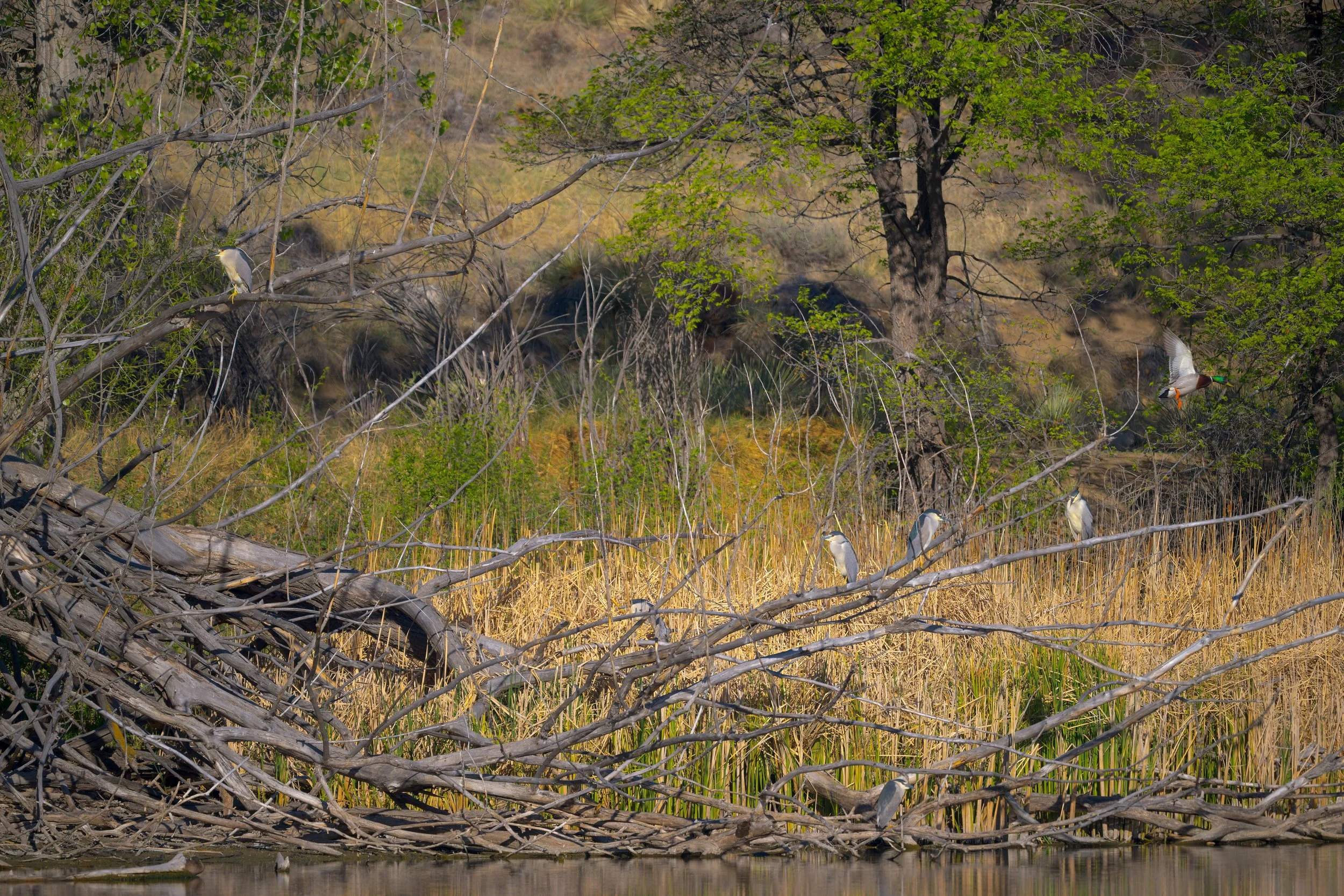
Six Black-crowned Night Herons, one escaping Mallard, Lake Bluff Nature Center
Three Habitats in One Mile
The loop around the lake is almost exactly one mile. Hutchens notes that along the way "you go into prairie habitat and wetland habitat and riparian habitat. That mix is the reason so many species turn up here.
The marsh. The Colorado Birding Trail calls Bluff Lake's marsh "truly excellent." It's home to Virginia Rail, Sora and Marsh Wren, and you might even find an American Bittern.
The lake. Look for ducks such as Cinnamon and Blue-winged Teal, Hooded Merganser and Canvasback. Also watch for Ruddy Ducks, Green-winged Teal and grebes. This morning, I found some American Wigeons having trouble getting along with each other. I didn’t see them, but Wood Ducks were spotted in the last two days. In the spring, six Black-crowned Night Herons were perched on one partially-submerged tree.
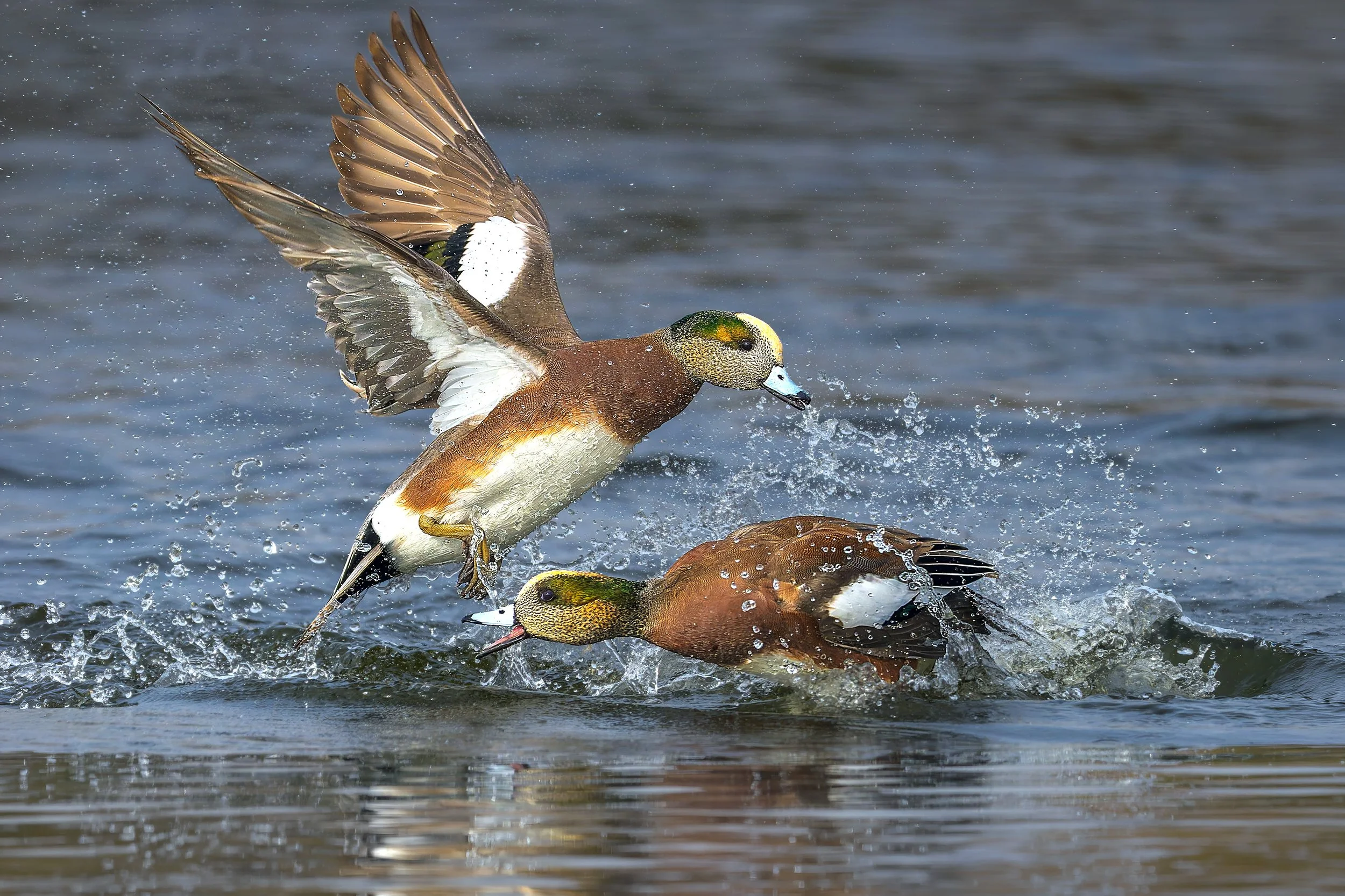
American Wigeons, Bluff Lake Nature Center
The creek corridor. The riparian strip along Sand Creek is worth checking for migrants in season. The half-mile Creek Loop is a good place to look for raptors. Red-tailed Hawks, Cooper's Hawks and American Kestrels are common there, and Sharp-shinned Hawks and Merlins show up occasionally. Earlier this summer, I found a Swainson’s Hawk.
When to Go
Bluff Lake is open from sunrise to sunset every day of the year, including holidays. Spring and fall migration bring the most variety. Winter has its own rewards, with raptors and waterfowl that stay through the cold months.
For photography, early morning and late afternoon are best. That's when animals are most active and the light is most flattering. One practical note: the gate locks at sunset, so watch the time on golden-hour evenings.
Photography Tips for Bluff Lake
Use the blind. There's an observation blind on the lake's north shore, which might be especially useful in the late afternoon and early evening sun.
Bring reach, but don't chase. Staying on the trail is one of Bluff Lake's firmest rules. A long lens (400mm or more) lets you fill the frame while giving birds their space. Use the boardwalk over the lake for closer looks at waterfowl.
Work the cattails. Rails and wrens in the marsh rarely give you a clean view. Switch to a single focus point so the camera doesn't lock onto the reeds in front of the bird. Listen first: you'll often hear a Sora or Virginia Rail well before you see one.
Watch the sky over the creek. For raptors over the Creek Loop, use a fast shutter speed (1/2000s or faster) and continuous autofocus. Wait for the moments when hawks hover or bank toward the light.
Use the setting. From the bluff above the lake, you can see both the downtown skyline and the Front Range. A wider shot of a bird with the city behind it tells Bluff Lake's story better than any tight portrait: wildlife holding on in the middle of a growing city.
Put ethics first. Bluff Lake follows Leave No Trace principles, and no photo is worth stressing a nesting bird.
Join a Bird Walk
If you're new to birding, or just new to Bluff Lake, the monthly bird walk is a good way to start. No experience necessary. Volunteers lead free walks on the first Saturday of every month at 8:00 a.m., weather permitting. The walks are free, but you need to RSVP, and registration closes at 3 p.m. the Friday before. In warmer months you can choose a 2-hour or a 2.5-hour walk. I’ve participated in one of their walks and enjoyed if very much. (https://www.blufflake.org/birdwatching#page-section-6263147fd0914f0e4b193eb1)
Before You Go
Address: 11255 E. MLK Jr. Blvd, Denver, CO 80238
Admission: Free
No pets or bikes: Pets (even on a leash) and bikes are not allowed, to protect wildlife from stress.
Bring: Layers, a hat and gloves for cold mornings, sunscreen and water.
Grab a checklist: Pick up the printable "Birds of Bluff Lake" checklist at the welcome kiosk. It lists the best habitat and season for every species recorded on site.
Log your sightings: Add what you see to eBird so your visit becomes data that supports conservation
Why It Matters
Bluff Lake shows that conservation doesn't only happen in faraway rainforests or remote mountain valleys. It can happen in a restored marsh next to a former runway, a few minutes from a big city where many people live. Every photograph from a place like this is a small argument for protecting it. Every new birder who joins a first-Saturday walk is one more person who will care.
So pack your camera, get there at sunrise, and see what's waiting in the cattails.